
District heating in Poland is undergoing a major transformation driven by new energy transition policies, a need for improved efficiency and EU regulations.
With one of the largest district heating infrastructure in Europe, Poland stands at a crucial threshold at the moment: one where the potential to harness local renewable and waste energy sources must be balanced against the complexities of transforming existing DH infrastructure that is mainly fueled by coal.
A transformation urgently required to meet both national and EU climate regulations, which have put heat decarbonization at the forefront of the continent's climate strategy.

But where exactly do heating systems in Poland stand in terms of decarbonization efforts, how do EU policies affect them, and what are the key technologies facilitating this transition?
Building from ARANER’s extensive experience in designing and implementing efficient district heating for decarbonization, below are some keys to understand where district heating in Poland stands today.
What does district heating in Poland look like today?
The Polish network presents one of the largest district heating ecosystems in Europe. With a large share of the urban population connected to one of such networks, the following figures provide a more detailed look at the Polish market today:
- There are 15 million district heating clients in Poland (1), so that almost 50% of the population is connected to a network (2)
- District heating sales in Poland are the second greatest of Europe only after Germany (1)
- In 2024 there were 398 licensed heating companies (Polish Energy Regulatory Office source)
This vast district heating infrastructure dates back to the post-World War II era. At that time, the country prioritized district heating during reconstruction, relying primarily on Poland’s coal reserves.
An extensive ecosystem that is now confronted with an urgent imperative to transition towards decarbonization.
Why is District Heating in Poland changing?
Heating systems in Poland face an urgent need for efficiency and decarbonization. This shift is driven by climate concerns and regulations from both national and EU mandates.
A transformation that, as put by the Polish District Heating Chamber of Commerce (IGCP) in a recent publication, has two main aspirations at its core: “To reduce our reliance on fossil fuels and at the same time, provide heat that is affordable and local.”
More specifically, the following 3 stand out as key reasons driving this shift in district heating in Poland:
1. Energy transition and decarbonisation
Coal, oil and peat still represent 67,4% of energy sources in Polish district heating, according to the Chamber of Commerce document mentioned above.
While this figure represents a decrease of almost 20% compared to data from 2003, it remains significantly higher than the 24.3% observed in other European district heating systems.
Current climate and pollution concerns are demanding district heating in Poland to transition away from coal-based heat production and, in turn, integrate renewable energy sources.
Movements have already taken place towards decarbonization. For instance, a paper by Kalina et al., 2025 describes how natural gas and biomass have been introduced. The paper also cites the recent introduction of industrial heat pumps, which marks some first steps towards the electrification of heating technologies.
Additionally, a recent publication by the Polish Energy Regulatory Office (URE) mentioned the advancement towards the coupling of the heating and electricity sector through measures like The Charter for Effective Transformation of the Distribution Systems of the Polish Energy Sector (KET).
EU regulations and climate policy
As an EU member state, Poland is legally bound to align its national policies with EU regulations.
As such, compliance with emerging EU legislation regarding energy efficiency and decarbonization is also shaping the future outlook of district heating in Poland.
More specifically, the two overarching legal frameworks that have a direct impact on heating systems in Poland moving forward include:
- European Union climate policies and decarbonization targets. The European Green Deal, announced in 2019, established the objective of making Europe the first climate-neutral continent by 2050. Additional legislation has been introduced since then to promote such a goal, having direct implications for European heating systems. This includes the ’Fit for 55’ package and the Revision of the Renewable Energy Directive, which has established that EU heating and cooling sectors must incorporate a 1.1% annual increase of renewable energy sources until 2030.
- Energy Efficiency Directive. A key part of EU energy policies, it obliges member states to achieve “fully decarbonised district heating and cooling supply by 2050.” As part of the measures, state members have the obligation to integrate renewable energy sources and promote efficient systems such as waste-to-heat technologies.
- EU Heating and Cooling Strategy. New regulation is expected for the second quarter of 2026 which “will support the implementation of current legislation to accelerate decarbonisation of the sector and improve its efficiency and system integration through integrated planning of energy infrastructure, district heating and cooling development and waste heat recovery.”
Meanwhile, Poland has developed its own Energy Policy of Poland 2040. Among other key measures, it establishes “a reconstruction of the Polish heating sector through the use of renewable energy sources, gas sources, high-efficiency cogeneration, and in individual heating – abandoning the use of coal by 2040.”
Aging infrastructure and modernization needs
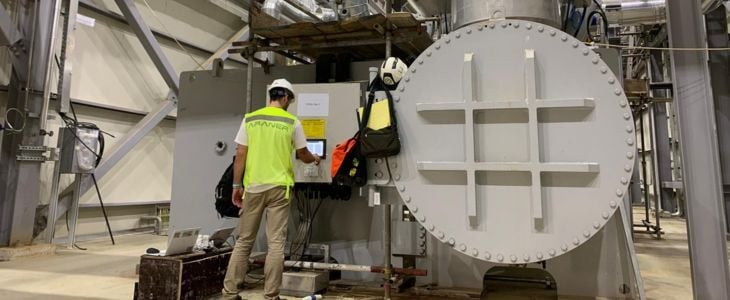
Poland’s district heating network was largely developed under a centralized planning model that shaped its current structure. To a high degree, it continues to rely on inefficient technologies and carbon-intensive energy sources today.
While modernization requires substantial investment costs and careful coordination efforts, the risks of not carrying out this transition (continued inefficiency and regulatory non-compliance) could quickly move on to become more costly.
The role of district heating in European heating systems
Heating systems in Poland present their own unique challenges and needs, but they are not alone in their quest for transitioning towards decarbonized, efficient operation.
Across the continent, efficient district heating networks are integrating renewables, heat pumps and waste heat recovery as a key pathway to achieve decarbonization and compliance with EU policies.
A move that comes down to district heating being uniquely positioned for decarbonization thanks to its capacity to “feed in locally available, renewable and low-carbon energy sources”, as put in the ‘Advancing district heating & cooling solutions’ paper by the Publications Office of the EU.
Meanwhile, district heating is also well positioned for its capacity to reduce energy costs and enhance system resilience by integrating diverse local energy sources. As explained by the International District Energy Association, “the critical advantage is that connecting multiple buildings to a district system creates economies of scale that enable the deployment of more efficient, resilient local energy resources.”
In this context, district heating systems in Denmark and district heating in Sweden provide two key models that demonstrate that large-scale renewable European heating systems are technically and economically feasible.
But successful models are not limited to these two countries: today, 80 million EU citizens are using district energy systems, with these European heating systems having already achieved 44.1% share of renewable energy in 2022, according to Euroheat & Power data.
What are the technologies enabling the transformation of district heating networks?
Large-scale heat pumps and electrification of heat
Large-scale heat pumps have been hailed as one of the most promising technologies for decarbonizing district heating networks. In fact, they are described by the European Commission as “an efficient, sustainable and increasingly affordable heating solution that is key to enabling the clean energy transition and achieving the EU’s carbon neutrality goal by 2050”.
Meanwhile, the International Energy Agency has described heat pumps as a “primary means of decarbonising space and water heating.”
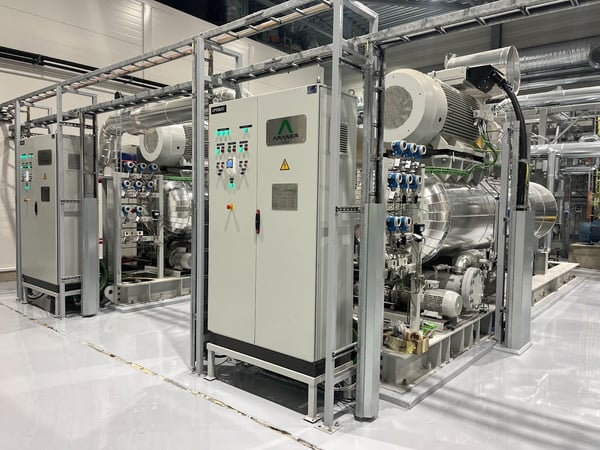
Heat pumps work by extracting thermal energy from low-temperature sources and using electricity to upgrade it to higher temperatures and make it suitable for district heating.
Large-scale heat pumps can extract heat from diverse sources (rivers, wastewater, seawater, geothermal sources, other industrial processes…) and, when powered by renewable electricity, they provide near-carbon-free heat. They are thus important allies for the electrification of heat, with advanced models capable of doing so with high-efficiency rates.
Waste heat recovery
Excess heat from industry or infrastructure can be reused and incorporated into district heating, giving way to a circular paradigm that moves toward higher efficiency and decarbonization.
At its core, waste heat recovery involves capturing thermal energy that is generated as a byproduct of certain processes and that would otherwise be released to the environment. Instead, the paradigm redirects this thermal energy to be used for district heating, with waste heat sources including seawater heating systems, waste-to-energy plants and waste heat from data centers or industrial processes.
This implies heat can be achieved with minimal additional primary energy consumption and very low carbon emissions. An advantage that has meant both The Renewable Energy Directive and The Energy Efficiency Directive require waste heat to be incorporated into decarbonization strategies by EU member states.
Thermal energy storage
Thermal energy storage technologies emerge as essential components for modern district heating networks for their capacity to improve network flexibility and to integrate renewable energy sources.
These systems are in charge of storing heat when it is abundant or cheaper to produce, releasing it in peak demand times or when supply is intermittent.
Thus, the technology enables the integration of intermittent renewable sources but also allows operators to produce heat at moments of higher efficiency or lower energy cost.
Future outlook for district heating in Poland
Heating systems in Poland are faced with little room to delay their modernization. Urgent investments are called to shape the future of district heating in the country in the coming years, with comprehensive upgrade programs aiming at improving efficiency and shifting towards renewable energy sources.
In this context, EU-funded programs such as the Just Transition Fund have been put forward with the goal of aiding coal-dependent regions to diversify their economies, making the transition more feasible.
The shape of things to come in district heating in Poland is already visible, with many Polish cities having already begun this modernization journey. While the pace of this transition will largely depend on policy support and financing availability, all scenarios point to a significantly decarbonized district heating in Poland in the coming decades.
This positions Poland's district heating sector as a potential model of how to move towards greener economies and a symbol for the country’s energy transition.
But this transition is more than symbolic: district heating in Poland represents a critical part of the country's energy infrastructure, with “households together with commercial and public buildings (...) responsible for more than 40 % of the final energy consumption in Poland” (Kalina et al., 2025).
With the modernization of networks, the country is thus tackling one of the largest opportunities for energy efficiency and emissions reduction in its entire energy system.
A major transformation that supports European climate and energy transition goals and which will require important technological, financial and social interventions.
Want to keep exploring more about the potential of district heating for decarbonizing heat? Discover ARANER District Heating solutions or download our District Heating Reference eBook.









 LINKEDIN
 YOUTUBE